 Widely read:


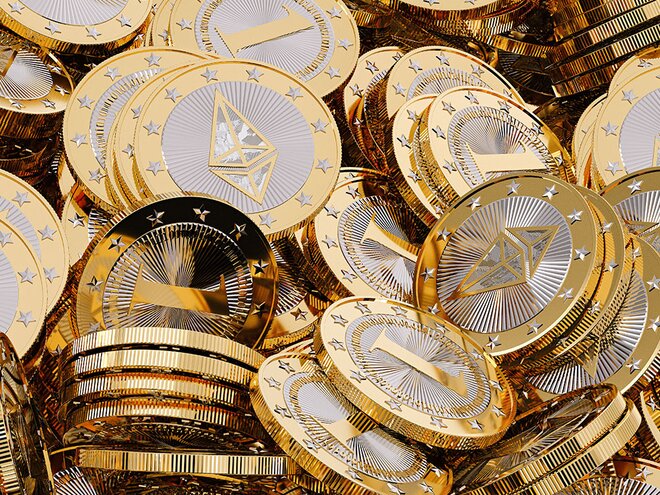
What is a currency? Anything that is accepted as both a medium of exchange and a store of value. It could be anything - paper, gold, silver, cowrie shells, etc., have all been used. Even strings of computer code with no physical existence could be acceptable. Indeed, digital cryptocurrencies, like Bitcoin and Ethereum, are just strings of computer code. Digital cryptocurrencies like these have caught on like wildfire in the past year or two. Bitcoin has seen its market value rise to $70 billion equivalent as its popularity has grown exponentially. Ethereum has jumped a mind boggling 2,300 per cent in value versus the USD over the last 12 months and its market value now is $28 billion. Compare Bitcoin to normal currency. Notes have serial numbers, security printing design, etc. A note is issued by a central bank. Two strangers can conduct a transaction using a note because they trust the central bank. The note can be dematerialised in a banking transaction. The money supply can be manipulated as the central bank chooses. Fractional-reserve banking magically improves money efficiency, just by circulating. Say, a bank accepts a deposit of Rs 100 and lends out Rs 90, keeping Rs 10 in reserve in case the depositor wants it back. The borrower of that Rs 90 invests Rs 80 in a business, which then buys Rs 80 worth of goods. The seller of those goods puts that Rs 80 back in the bank. The same notes have done work multiple times due to circulation. The bank now has Rs 180 on its books as if by magic. It can retain, say, Rs 8 and lend out Rs 72 more and the process repeats. Fractional-reserve banking is crucial in the way that it generates economic activity as money circulates. The higher the velocity, the more the activity. Cryptocurrencies are harder to understand conceptually. Their existence depends on purely mathematical concepts, not on central banks. They take the definition of currency to the logical limit. Bitcoin is 'mined' by solving complicated maths puzzles using computers. Each 'coin' is a string of a cryptic computer code (it can
This article was originally published on October 20, 2017.

 New episodes every Friday


 New Process Alert
 Seems like you've uploaded a wrong QR code. Please upload the QR code downloaded from MF Central platform.


