 Widely read:


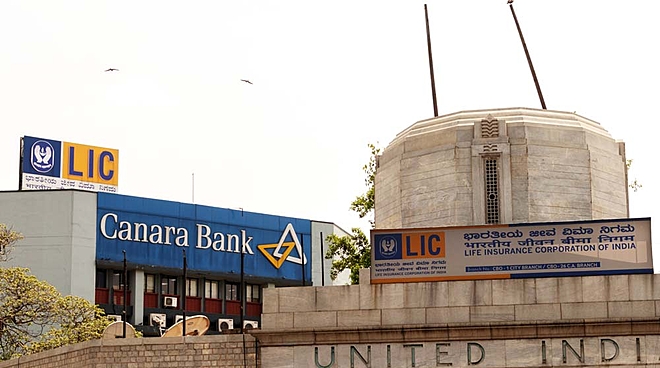
It was the public sector that flagged off the first set of mutual funds in India, with UTI's debut in 1964 followed by SBI Mutual Fund in 1985. Amid hectic consolidation and entries and exits by private-sector players and foreign asset-management companies, some of the original public sector-sponsored asset-management companies have stood the test of time. They have survived the last two decades, with their many ups and downs for the markets and changing investor preferences, by re-inventing themselves to keep up with the times.
LIC Mutual Fund, one of the oldest fund houses, was established in 1989. Sponsored by India's largest domestic institutional investor, the Life Insurance Corporation, it is in the midst of such a reinvention. In the last couple of years, this public-sector asset manager has effected a comprehensive overhaul of its top management, schemes, mandates and investment processes for a sharper focus on investors. This has begun to pay off in the form of strong growth in assets under management.
Back to growth
In the last five years, from March 2012 to March 2017, AMFI data show that LIC Mutual Fund's assets under management (AUM) have expanded nearly four-fold, from ₹5,799 crore to ₹21,475 crore. A significant part of this increase has been managed in just the last two years. From ₹9,313 crore in end-March 2015, the assets have burgeoned to ₹21,475 crore by March 2017.
True, this has been a period when both debt and equity mutual funds have gained renewed traction with retail investors on the back of supportive market conditions. But LIC Mutual Fund's AUM growth, at 130 per cent over the last two years, has outpaced the industry's asset growth of 54 per cent, showing its rising popularity with investors.
Strengthening the core team
In May 2016, LIC Mutual Fund's ownership structure underwent a change after Japanese financial giant Nomura completely exited the joint venture which sponsored the AMC.
Nomura's 35 per cent stake in the AMC has been bought out by LIC Housing Finance, an existing partner, and two new partners GIC Housing Finance and Corporation Bank. Post this change, LIC of India holds 45 per cent in the AMC. 39.3 per cent is held by LIC Housing Finance, 11.7 per cent is held by GIC Housing Finance and 4 per cent by Corporation Bank. LIC Nomura Mutual Fund has also reverted to its erstwhile brand-name of LIC Mutual Fund. Nomura's exit therefore has had no material impact on the operations or growth LIC Mutual Fund.
LIC Mutual Fund is now among the few AMCs in India to be wholly owned and run by domestic institutional investors.
The large individual-agent network of LIC in tier 2 and tier 3 towns was one of the traditional strengths of the AMC, which relied heavily on an IFA network for distribution. However, in the last three years, LIC Mutual Fund has made a conscious effort to ink new marketing alliances with bank distributors and national-level distributors. Initiatives to diversify distribution channels and to expand market share in the top 15 cities, the fund house says, are yielding results.
Investment team
LIC Mutual Fund currently has a six-member equity investment team, including two fund managers, who are also hands-on in the research function. It has a similar-sized fixed-income team. Fixed-income investments, which were originally handled by a team from LIC, have been moved in-house in recent years, with both the equity and debt teams reporting in to the Chief Investment Officer (Saravana Kumar). The AMC is among the few to have a dedicated credit team, with three analysts who take an independent view of corporate and other credit exposures across schemes.
The change in ownership structure of the AMC has not had a material impact on the investment process or strategy, with the processes ushered in during Nomura's tenure still in place to screen the investment universe and select stocks. The fund house has an active coverage universe of 190 stocks on the equity side. Stocks, once included in the coverage universe, are actively monitored on a quarterly basis for any changes to business fundamentals.
Redefined product mandates
LIC Mutual Fund has a diverse product basket, both on the equity and debt sides. It also has a good representation of different investment styles and strategies, with no bias towards one particular style. Though it manages 21 open-end and 21 closed-end schemes, the growth has been entirely organic and the portfolio has minimal product overlaps.
On the equities side, the portfolio has been deliberately designed to capture both growth and value styles, so that the AMC can deliver performance across different market phases. Therefore, while LIC Equity Fund is a value fund focused on identifying stocks facing temporary headwinds or those in sunrise sectors, LIC Growth Fund buys quality businesses with promising growth prospects. Both tilt towards large-cap stocks.
The more recent LIC Midcap Fund invests in companies that make up the Nifty Free Float Midcap 100 or those that fall within its market-cap range.
The thematic funds in the fold track critical sectors for the economy. LIC Banking and Financial Services Fund invests across the entire gamut of financial services which make up a key weightage in the Indian bellwethers. LIC Infrastructure Fund is required to invest at least 70 per cent of its portfolio in stocks from the infrastructure theme, again screened on quality and business parameters.
LIC Tax Plan is a market-cap agnostic fund that has a growth and quality bias.
Among hybrid products, LIC Balanced Fund is an equity-oriented balanced scheme, while LIC Unit Linked Insurance Scheme is a legacy fund that offers a balanced portfolio with tax breaks and insurance benefits tagged on. There's also LIC Children's Fund with a 70-30 equity-debt mix. The fund house also runs a monthly income plan with a 20 per cent equity exposure.
Debt-scheme mandates are equally well defined. At the shortest end, LIC Mutual Fund manages the low-risk conservative Liquid Fund for investors with up to a three-month horizon and a Savings Plus Fund for investors with a three-month to one-year horizon. This fund offers accrual income through bets on corporate securities.
For the medium-term horizon of one year to three years, the offerings are Income Plus Fund - invested in T-Bills and low-risk corporate debt - and Bond Fund with a three-year plus horizon and a slightly higher risk profile. For long-term investors, there's the dedicated G-sec Fund.
Apart from its active schemes, LIC Mutual Fund also has a clutch of passive schemes in its portfolio. Apart from the open-end LIC Index Funds - Sensex Plan and Nifty Plan - there are three ETFs tracking the Nifty 50, Nifty 100 and Sensex. The fund house hopes to expand its passive portfolio right alongside the active one, as it sees long-term potential in ETFs to attract institutional and smart money.
A unique offering from LIC Mutual Fund in the ETF space is the LIC G-sec Long Term ETF, a fund which consistently maintains a passive portfolio of 8-13-year government securities in order to closely mirror long-term gilt returns. Savvy investors keen to reap returns from rate swings can use this ETF to park their long-term surpluses at a much lower expense ratio than charged by active gilt funds.
What's ahead
With clearly focused schemes and mandates, a strong management and investment team in place, LIC Mutual Fund has ambitions of scaling up to a top-five spot in the Indian mutual fund industry. The fund believes that, after the exceptional run in the equity as well as debt markets in the last couple of years, the coming months could see considerable volatility in both assets. However, with the structural recovery in the economy, markets and corporate earnings underway, this will be the cue for investors to step up their commitments to mutual funds as an investment vehicle.
Disclaimer: This content is for information only and should not be considered investment advice or a recommendation.
For grievances: [email protected]
Ask Value Research 
 New episodes every Friday

 New Process Alert
 Seems like you've uploaded a wrong QR code. Please upload the QR code downloaded from MF Central platform.


