 Widely read:


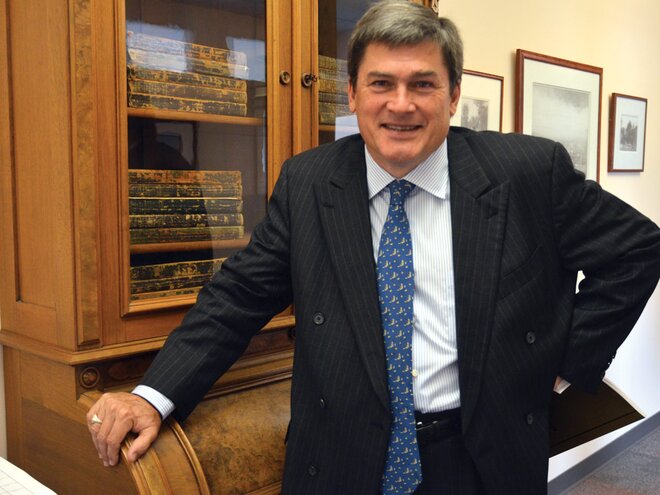
Thomas A. Russo, Partner, Gardner Russo & Gardner oversees investments to the tune of $11.85 billion. He is a periodic guest lecturer at Columbia University's value-investing programme - the world's premier value investing programme headed by Professor Bruce Greenwald. Mr Russo does not think generating free cash flow is a sufficient indicator of the investment worthiness of a company. Rather investment worthiness is determined by the 'capacity to reinvest' free cash flows and whether such investments create value in the long term. The search for companies that have the capacity to reinvest turns Mr Russo to concentrate on a few sectors that exhibit such companies - sectors like food, beverages, tobacco and media. Companies that have the capacity to reinvest invariably have strong brands and that's where Mr Russo's stock-picking shines. His thought processes on brands is a masterclass that every value practitioner should learn from and will undoubtedly gain wisdom from. Ekramul Haque interviews Mr Russo to gain insight into his approach. Here are some excerpts. Dig in. How has the concept of value impacted your investing style? The metaphor with which Mr Buffett has helped me conceptualise the desire to add a pragmatic margin of safety to my investing has been to 'invest as if you were purchasing vegetables not perfume'. For example, when you look to buy a head of cabbage, you look to the leaves, their color, their feel, their appearance, their smell, their touch and any number of other variables, all of which collectively inform you as to whether or not you are getting your money's worth when you shop for vegetables. The margin of safety comes from assuring yourself on all accounts that the item of desire is worthy and by driving a tough bargain. Consider just the opposite when one purchases perfume. You are typically invited by attractive cosmetic-counter professionals, designed through their dress, demeanour and delivery to lift as much money from your pocket as possible. With assurances that whatever perfume it is that they sell will change your life one is disarmed and surely susceptible to fascinations. In addition, one would never dare to think of asking for a bargain price off something that can be so potentially life changing as the proper scent. It has been clear to me over the years that I prefer shopping for vegetables than for perfume for the reasons expressed above. You like family-run businesses. Why? I prefer family-run businesses because of my belief that through them I can address a primary risk to public market investors, which is agency cost. Agency cost is the likelihood that those people who manage your assets, the owner's assets, do so with their interests in mind and not yours, the owner's interest. You are an absentee farmer, let us say, and an agent is managing crops for you on a farm in Nebraska. He takes too large a share and does things to 'feather' his nest. That risk is compounded in the world of public investing, especially since the late 1980s when stock options became such a furiously used form of remuneration for mainly American company executives. The benefit of investing with family-controlled enterprises is that the family can exert dominion over managements in a way that faceless public shareholders cannot. They have control, so they can influence the strategic direction. They have control, which allows them to guarantee managers that if they embark on the right investment programs, they will not run the risk of being displaced from their jobs if midway through the investments

 New episodes every Friday

 New Process Alert
 Seems like you've uploaded a wrong QR code. Please upload the QR code downloaded from MF Central platform.


