 Widely read:


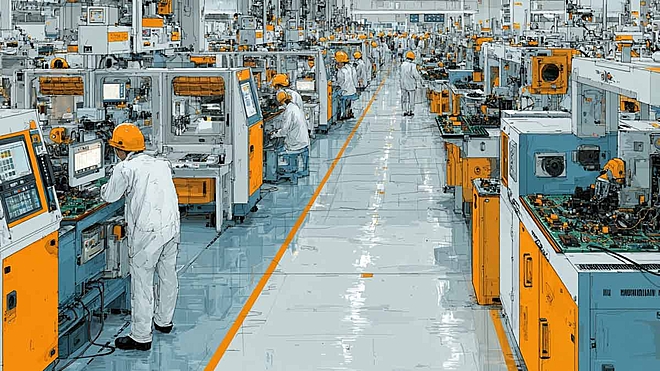 Mukul Ojha/AI-Generated Image

Summary: Is Sedemac Mechatronics IPO worth subscribing to? Check our analysis of its business model, strengths, weaknesses and valuation to decide.
Sedemac Mechatronics IPO will open for subscription from March 4 to March 6, 2026. The issue is a complete offer for sale (OFS) for Rs 1,087 crore. Below is an analysis of the company’s strengths, weaknesses, financials and valuations to help investors decide whether the IPO (initial public offering) is worth subscribing to or not.
What the company does
Sedemac designs and supplies electronic control units (computerised systems) to vehicle and industrial equipment manufacturers, enabling engines and powertrains used in both on-road and off-road applications. Its products act as critical components where a failure can render the entire equipment inoperative. Exports contributed about 9 per cent of revenue in the first nine months of FY26, largely to customers in the US.
The company generates revenue from two primary segments.
The mobility segment is the largest revenue driver, making up roughly 85 per cent of total sales. Here, the company makes smart controllers (starter generators) that enable silent, jolt-free starts in petrol vehicles and commands a 35 per cent volume share across two- and three-wheelers, as per rating agency Crisil. Key customers include TVS Motor, Bajaj Auto, Hero MotoCorp and M&M. It has also expanded into electric vehicle motor control units (MCUs), which regulate high-voltage power flow between the battery and the motor.
The industrial segment brings in the remaining 15 per cent of revenue, where its dominance is even starker. It supplies genset (generator set) controllers that automatically fire up backup diesel and gas generators the moment a blackout occurs. Here, the company holds a 75 to 77 per cent market share. It also holds a 14 per cent share globally, supplying to key manufacturers like Cummins India and Kirloskar Oil Engines.
Financial recap
As the company scaled production over the years, manufacturing efficiency kicked in, leading to a lowering of costs and a sharp jump in profits in FY25. The balance sheet was also meaningfully de-risked, with the debt-to-equity ratio falling from 1.4 times to a comfortable 0.2 times. ROCE, which measures capital efficiency, as a result also leapt impressively.
That said, the company’s growth is straining capacity. While FY25 capex expanded capacity at its key facility by 32 per cent, utilisation surged to over 93 per cent by nine months of FY26. This is well above the company’s 80-85 per cent range, underscoring the need for continuous investment.
Sedemac Mechatronics IPO details
|
Total IPO size (Rs cr)
|
1,087 |
| Offer for sale (Rs cr) | 1,087 |
| Fresh issue (Rs cr) | - |
| Price band (Rs) | 1287-1352 |
| Subscription dates | March 4-6, 2026 |
| Purpose of issue | Offer for sale |
Post-IPO
|
M-cap (Rs cr)
|
5,971 |
| Net worth (Rs cr) | 303 |
| Promoter holding (%) | 22.2 |
| Price/earnings ratio (P/E) | 126.9 |
| Price/book ratio (P/B) | 14.5 (as of 9M FY26) |
Financial history
| Key financials | 2Y (%pa) | 9M FY26 | FY25 | FY24 | FY23 |
|---|---|---|---|---|---|
| Revenue (Rs cr) | 24.8 | 771 | 658 | 531 | 423 |
| EBIT (Rs cr) | 109.5 | 111 | 76 | 42 | 17 |
| PAT (Rs cr) | 134.3 | 71 | 47 | 6 | 9 |
| Net worth (Rs cr) | 62.4 | 410 | 303 | 124 | 115 |
| Total debt (Rs cr) | - | 71 | 64 | 170 | 134 |
| EBIT is earnings before interest and tax PAT is profit after tax |
|||||
Ratios
| Key ratios | 3Y average (%) | 9M FY26 | FY25 | FY24 | FY23 |
|---|---|---|---|---|---|
| ROE (%) | 11.5 | 20 | 22 | 4.9 | 7.5 |
| ROCE (%) | 15.1 | 26.1 | 22.8 | 15.5 | 6.9 |
| EBIT margin (%) | 7.8 | 14.4 | 11.5 | 7.9 | 4.1 |
| Debt-to-equity | - | 0.2 | 0.2 | 1.4 | 1.2 |
| ROE is return on equity ROCE is return on capital employed |
|||||
The good
Let’s first take a look at the major strengths underpinning the company:
1) High barriers to entry
The company was notably the first to commercialise smart controllers in India, eliminating physical sensors and thus achieving massive scale. Further, its controllers serve as critical parts of the engine. Given validation cycles of 2.5 to 5.5 years involving testing and approvals, supplier switching is costly and slow, creating high entry barriers.
2) Sectoral tailwinds
Demand for its products is firming up as consumers are gravitating toward higher-end motorcycles and scooters that feature silent start-stop systems requiring its controllers. At the same time, faster vehicle replacement cycles are accelerating the phase-out of old mechanical fleets. This is clear from the increased penetration of smart controllers, up from zero in 2018 to nearly 36 per cent today, according to Crisil.
3) Expanding addressable market
While internal combustion engines (ICE) provide the current cash flow, the company is actively building its next runway. Domestic two-wheeler EV penetration has meaningfully improved, which has helped the company scale MCUs from under 800 units in FY23 to over 45,000 units in the first nine months of FY26.
The segment is still nascent. EV controller systems made up 6 per cent of total revenue for the first nine months of FY26. Beyond vehicles, the company is adapting its motor control technology for global power tools and e-bike markets.
The bad
Despite its prowess, Sedemac carries some structural risks that warrant attention.
1) Single customer concentration
The company is highly dependent on TVS Motor, which alone drove 75 per cent of revenue in the first nine months of FY26. This dependency strains liquidity, with 91 per cent of trade receivables tied to just three clients. Further, it relies heavily on these anchor customers to validate and commercialise emerging technologies, meaning the loss of a key relationship could stall broader market adoption for new products.
2) Dependence on a fading ICE market
The company’s financials remain tethered to internal combustion engine vehicles. In the first nine months of FY26, about 64 per cent of revenue was tied entirely to a single ICE product line (starter generators).
Meanwhile, its heavily touted EV products contribute negligible revenue. This creates a dangerous timeline gap. Because EV revenue cannot yet support its topline, the company is entirely reliant on squeezing growth out of a market that is actively being phased out. If the ICE segment plateaus before the EV segment scales, the company faces an immediate and severe growth wall.
3) Supply chain vulnerability
As an electronic controller manufacturer, it relies on global supply chains with over 74 per cent of its raw material costs made up of semiconductor components. The company imports a significant volume of these semiconductors and printed circuit boards from China. In the first nine months of FY26, imported raw materials accounted for 50 per cent of total expenses. Should China tighten export controls on critical electronic components, it could delay production schedules and severely impact profit margins.
Is the valuation justified?
At the upper price band, the company seeks a valuation of roughly Rs 5,971 crore, pricing the business at nearly 127 times earnings, more than double the sector average of 52.2 times. Its closest auto-component peers include Sona BLW, Bosch, Schaeffler and ZF Commercial, which trade at far cheaper multiples.
The company is not being valued as a conventional auto-component supplier but rather as a technology company that simply sells to the auto sector. The distinction is credible: the company owns proprietary IP, holds dominant market positions in smart controllers and has delivered sustained revenue growth with expanding EBIT margins.
However, this premium valuation leaves zero room for error, pricing the business well beyond perfection.
The company faces multiple risks: extreme customer concentration that creates revenue vulnerability, an unproven EV transition that remains early-stage, and ballooning trade receivables.
Management itself has explicitly flagged that recent high-growth rates will moderate as the revenue base matures, meaning the momentum so far in FY26 is not a permanent run-rate. Taken together, these factors leave a limited margin of safety at the asking price.
So, should you apply to the Sedemac Mechatronics IPO?
Since it is difficult to accurately assess IPO companies given their limited financial history, it is wiser to wait and watch before buying into new entrants. If you want to find stocks that are worth buying today with a sufficient track record, proven fundamentals and a solid growth runway, explore Value Research Stock Advisor, where we recommend businesses that pass our key fundamental and valuation parameters.
Disclaimer: This content is for information only and should not be considered investment advice or a recommendation.
For grievances: [email protected]
Ask Value Research 
 New episodes every Friday













 New Process Alert
 Seems like you've uploaded a wrong QR code. Please upload the QR code downloaded from MF Central platform.


