 Widely read:


 Anand Kumar
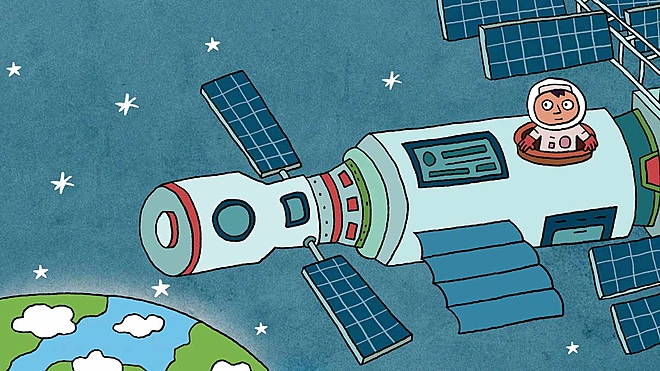
Summary: AI’s explosive growth is colliding with Earth’s power and water constraints, pushing hyperscalers to explore orbital data centres. Falling launch costs and abundant solar energy in space could make this science fiction concept a commercially viable infrastructure shift over the next decade. The global frenzy surrounding generative AI has, until now, been largely viewed through the lens of software and chips. But for the serious investor, the real story is shifting toward the massive, often insurmountable physical infrastructure required to sustain it. As we look at the constraints mounting on Earth, a concept previously relegated to science fiction is gaining institutional legitimacy: moving data centres into space. Click here to listen to the possibilities and challenges from one of the key proponents – Elon Musk. The ‘orbital/space data centre’ (SDC) sits at the intersection of three converging trends: surging AI power demand, tightening land and water constraints on Earth and the precipitous fall of launch costs. Over the next decade, this transition will move from a thought experiment to a niche but commercially meaningful reality. The terrestrial wall: Why Earth is getting too small The current trajectory of AI development is hitting a physical ‘wall’ composed of two primary elements: Power and Water. Goldman Sachs Research estimates that global data centre power demand will grow by 175 per cent by 2030 compared to 2023 levels. This is equivalent to adding the power consumption of a top-10 global economy to the grid in less than a decade. In the United States, data centre demand is expected to accelerate power growth to levels not seen since the 1990s, potentially accounting for 11 per cent of total US demand by 2030. While power is the most discussed constraint, water is the underappreciated bottleneck. AI data centres are projected to drive an 11 times increase in annual water consumption for cooling and electricity generation by 2028, reaching approximately 1,068 billion litres. Water stress is a localised, non-fungible risk. Over half of the world’s leading data centre hubs, including Mumbai, are located in
This article was originally published on March 01, 2026.





 New Process Alert
 Seems like you've uploaded a wrong QR code. Please upload the QR code downloaded from MF Central platform.


