 Widely read:


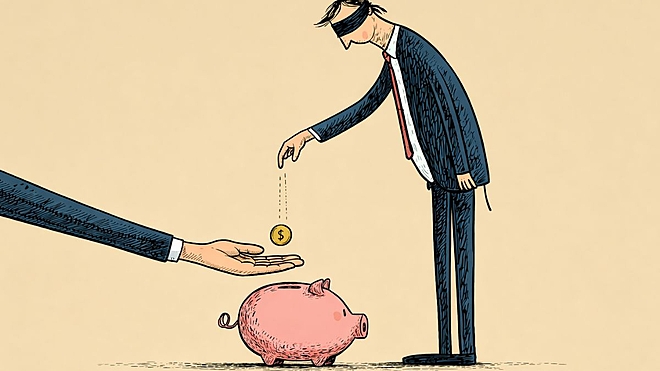 Aditya Roy/AI-Generated Image


There's an old technology term that has vanished from everyday use: Wysiwyg, pronounced 'wizzy-wig'. It stands for 'What You See Is What You Get' and was coined in the early days of word processing to describe software that showed exactly what would appear on the printed page. No hidden surprises, no mysterious formatting changes. What you saw was genuinely what you got. Nowadays, Wordstar and WordPerfect are long gone, and every word processor is ‘Wysiwyg’, so we have forgotten the term.
If only the same could be said of fintech platforms.
The digital world has long operated on a simple principle that most users have now internalised: if you're not paying for the product, then you are the product. Your attention gets sold to advertisers, your data gets monetised and your eyeballs become inventory. This bargain, uncomfortable as it may be, is at least reasonably transparent. You know that Gmail is free because Google shows you ads. You understand that social media platforms are harvesting your preferences and behaviours.
Fintech platforms, however, represent a special and rather more insidious case of this phenomenon. Consider the growing number of apps that offer completely free mutual fund investing. No subscription fees, no transaction charges, nothing. The funds are direct plans, meaning no commissions flow to the platform. So, how exactly are they making money?
The answer lies in everything else they'd like to sell you. Your presence on their platform makes you a prospect for more expensive, high-fee services. Today you're investing in mutual funds; tomorrow you might be tempted by stock trading, which inevitably pushes you towards derivatives, where the real money is made from hapless retail traders. The day after, perhaps you'll be offered a personal loan based on your investment portfolio, or an insurance policy, or access to portfolio management services marketed as 'family office' solutions for the upwardly mobile.
In an article some months ago about platforms switching between direct and regular plans, I noted that in the actual business landscape where most investing happens, the direct-versus-regular decision often gets made for you, and not based on your capability. It gets decided by what works better for the platform's revenue model. That observation applies even more forcefully here. The entire architecture of these free platforms is designed around what they can eventually extract from you, not around what best serves your investment needs.
And it's not merely the business model driving this. Most fintechs are VC-funded and chronically loss-making, which means they cannot afford to grow slowly and build trust organically. Aggressive growth is existential for them. It's what keeps the funding flowing and the valuation story alive.
But perhaps the most troubling pattern I've observed is what appears on some platforms when you navigate to their mutual fund section. You're presented with a choice: free service or a paid subscription. To the casual visitor, this seems like a no-brainer. Why pay when you can get something for free?
The free option leads to regular plans, in which the fund house pays the platform a commission that is deducted from your returns. The paid option, typically a modest flat fee, gives you access to direct plans with significantly lower expense ratios. Over time, that difference compounds into serious money, as I've written before. This is a dark pattern masquerading as consumer choice. It exploits the natural human tendency to avoid paying for something that appears to be free. The visitor who clicks 'free' believes they're being financially prudent. In reality, they're signing up for higher costs that will quietly erode their wealth for years.
What makes this particularly galling is that the information asymmetry is entirely deliberate. These platforms know exactly what they're doing. They understand that most investors won't dig into expense ratios or calculate the long-term impact of that seemingly small percentage difference. They're counting on it.
The solution isn't necessarily to avoid all fintech platforms. Many offer genuine convenience and have democratised access to investing in ways that benefit retail investors. But approach them with your eyes open. When something is free, ask yourself what you're really paying. When presented with choices that seem obvious, pause and consider who benefits from your obvious choice.
In investing, as in technology, what you see is rarely what you get. The real costs are almost always hidden in the fine print, or more often these days, hidden in the business model itself.
Fintech “free” often comes with invisible costs—commissions, nudges, and conflicts that quietly eat into your returns. Value Research Fund Advisor is built to avoid that: a straightforward subscription, advice focused on your goals, and investing only through low-cost direct plans—no commission incentives. You get a personalised portfolio plan, a curated list of Analyst’s Choice funds, and clear guidance to keep your investments on track.
Learn more (and get started).
Join Value Research Fund Advisor
Ask Value Research 
 New episodes every Friday











 New Process Alert
 Seems like you've uploaded a wrong QR code. Please upload the QR code downloaded from MF Central platform.


