 Widely read:


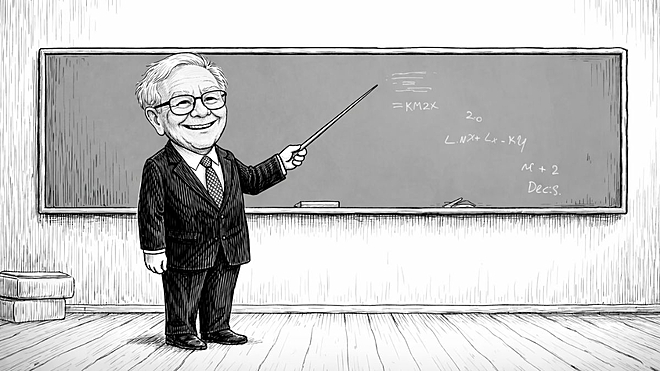 Aditya Roy/AI-Generated Image
The market is a very divisive place. It is where people get together to vote for the sectors of tomorrow, pick the potential multibaggers, and crown the best investment style. While they sure have strong opinions, most are incorrect. Instead of chasing noise, it helps to return to enduring principles. Few investors have articulated them better than Warren Buffett. Over decades, his investment philosophy has evolved, but the core ideas remain remarkably relevant. Here are four lessons from Buffett that investors can apply today. 1. Avoid the cigar butt approach This is an investment style Buffett picked up from Benjamin Graham, the father of value investing. It involves spotting companies trading below their intrinsic value. And then holding that business until the share price runs up and matches the intrinsic value. Then, finally, selling the stake. That said, it led him to buy up Berkshire Hathaway, the textile mill. The business was so capital-intensive that he was hard-pressed for cash flows. It was a decision he regretted immensely. There are two issues with this approach. One, it requires expert timing that is highly challenging for a regular investor. Second, you’ll end up choosing companies where the intrinsic value falls into stagnancy. As a result, there’s no room for long-term growth. However, once he worked with Charlie Munger, his strategy changed dramatically. Munger informed him that there’s more money to be made by picking great businesses at fair prices. In his view, businesses needed to show potential for growing their intrinsic value. Taking it a step further, Buffett decided to pick businesses that belonged in growing industries. Lastly, these businesses command a premium that he felt was warranted rather than paying for a discount that wouldn’t serve well as a long-term investment. Suggested read: The hidden compounding engine 2. Good capital allocation gives the edge Castrol India is a much-lauded quality stock. It boasts a 10-year average return on equity (ROE) of 55 per cent and rising cash flows. Truly, the business is a cash cow. But the profits tell a different story. The business struggles with a 10-year compounded profit growth of 7 per cent. And the reinvestment rates are dwindling day by day. It is a business that looks good on paper but fails to reinv
This article was originally published on January 23, 2026.

 New episodes every Friday











 New Process Alert
 Seems like you've uploaded a wrong QR code. Please upload the QR code downloaded from MF Central platform.


