 Widely read:


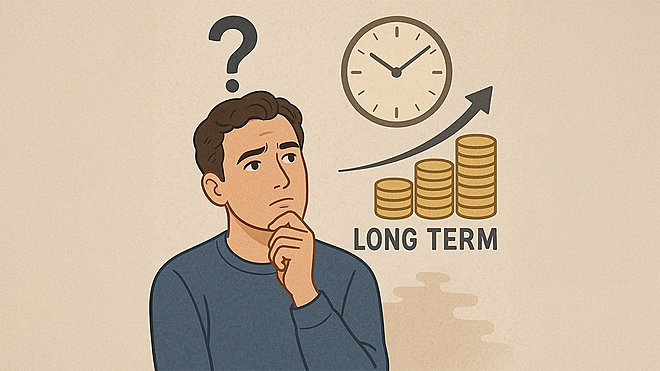 Nitin Yadav/AI-Generated Image

Summary: Over the last 10 years, a one-year investment in an average mid-cap fund had a 25 per cent chance of going negative. Even a three-year horizon didn’t fully eliminate the risk. Which is why we crunched numbers to find the exact point where mid caps stop behaving like a gamble and start acting like a long-term compounding machine. The results may completely change how you approach mid-cap investing. Mid-cap funds have been one of the most sought-after categories. Today, mid-cap funds manage over Rs 4.54 lakh crore, making them the third-largest equity category, bigger than even small-cap funds. That tells you one thing: investors want growth, but they want it with a seatbelt on. But here’s the real question: How long should you stay invested to actually benefit from mid-caps? Because while the “mid-cap” label feels safer than “small-cap”, data show that short-term investing in mid caps is a dangerous sport. To understand this, we analysed rolling returns of an average mid-cap fund between November 2015 and November 2025. If you invested for one year The one-year picture is noisy, and not in a good way. The average mid-cap fund delivered negative returns 25 per cent of the time. Essentially, there’s a one in four chance that a one-year investor in mid-cap funds would have seen their investment shrink in size. There’s an even more damning stat: an average mid-cap fund delivered worse than –10 per cent returns 10 per cent of the time. For those chasing quick returns, here’s the number that

 New episodes every Friday











 New Process Alert
 Seems like you've uploaded a wrong QR code. Please upload the QR code downloaded from MF Central platform.


