 Widely read:


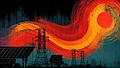
 Aditya Roy/AI-Generated Image

Voltas, the air-conditioning giant, recently announced its foray into the fans market—more specifically, into the BLDC (Brushless Direct Current) fan category. At first glance, this move seemed puzzling. Typically, companies expand from basic appliances into higher-value ones, not the other way around. But Voltas isn’t alone. Over the past few months, several players have made similar moves, prompting us to take a closer look at what’s driving this sudden rush toward BLDC fans. BLDC: The next big thing in Indian homes At the heart of this transformation is a simple but revolutionary technology: the BLDC motor. Short for Brushless Direct Current motor, it replaces the traditional brushed or induction motors found in most ceiling fans with a smarter, more efficient system. The key upgrade? It removes friction-causing brushes and uses electronic circuitry to control rotation. Think of it like this: a regular fan motor is akin to an old bicycle with a rusty chain—sluggish and inefficient. A BLDC motor, by contrast, is a sleek, gearless e-bike—quiet, responsive, and energy-smart. But this isn’t just a clever bit of engineering. While conventional fans typically consume 70 to 75 watts, BLDC fans draw just 30 to 35 watts—a savings of nearly 60 per cent. In a country where most homes operate multiple fans year-round, that translates to substantial energy and cost savings. According to the Central Electricity Authority, ceiling fans account for up to 20–30 per cent of a household’s electricity use. Reducing that consumption by even a third could significantly reshape India’s domestic energy profile. Efficiency calaculator The transition has a real use case Conventional Fans BLDC Fans Power Consumption 70-75 Watts 30-35 Watts Hours of Usage 16 16 KWhr units per day 1.2
This article was originally published on July 19, 2025.

 New episodes every Friday









 New Process Alert
 Seems like you've uploaded a wrong QR code. Please upload the QR code downloaded from MF Central platform.


