 Widely read:


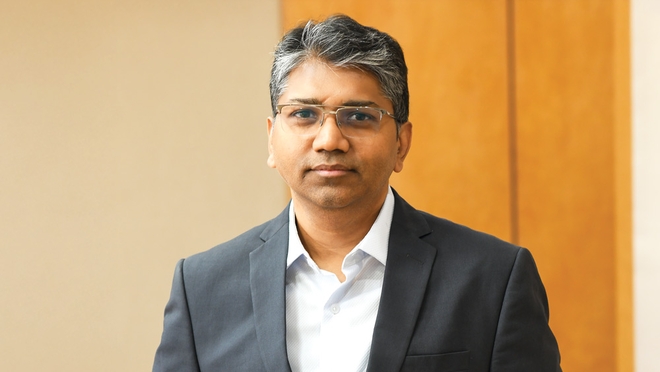
With nearly two decades of equity investing experience and a deep expertise in the pharmaceutical sector, Chirag Dagli, Fund Manager at DSP Mutual Fund, brings a clear-eyed view of the Indian healthcare space. At a time when most investors are on the edge regarding the impact of US President Trump’s tariffs on Indian pharmaceutical companies, Dagli remains unfazed, calling them “straightforward problems to solve.” Currently, Dagli manages two schemes at the fund house – DSP Healthcare Fund and the DSP Multicap Fund. Of these, the former is rated four stars by Value Research. In this interview, Dagli lays out which pharma segments he finds ripe for growth and those that are overpriced, explains why the CDMO space offers big opportunities for Indian companies and highlights the key factors poised to shape the future of Indian healthcare over the coming decade. The hot topic right now is US tariffs. To what extent can it have an impact on Indian healthcare companies? Do you think that if continued, these can have long-term growth effects on the industry? First, let’s look at the numbers. The US is a large $900 billion medicines market at patient or consumer prices. Of that, $100 billion is essentially generics. So, we are 10 per cent of the overall medicine bill in terms of value. In terms of volume, it’s precisely the reverse. Of the 10 pills consumers consume, nine are generic medicines and one is the innovator’s medicine. So, we are small in the context of medicine prices. That’s the point I want to make: Large in the context of volume, but substantially small in the context of value. When Trump wants to cut prices on medicines, do you think he wants to attack the 10 per cent pool in terms of value, or the 90 per cent pool in terms of value? That’s the first point. The second point is that when you look at the $100 billion, give or take, worth of price at which the consumer is paying for generic medicines, the manufacturer makes only $40 billion or 40 per cent. A large part of the value for generic drugs is sitting in the US. These are pharmacy benefit managers, wholesalers and retailers who make that part of the profits. Having discussed these basics, when you think about tariffs, say a 10 per cent tariff, just give or take. Today, India does charge, and we import from the US about $400 million worth of medicines at a 10 per cent import duty. So, if there is a 10 per cent tariff, it will be at manufacturer prices or on the $40 billion. That’s $4 billion at consumer prices, which is substantially lower than the entire medical bill for the consumer. So, it’s 10 per cent on $40 billion in a market worth $900 billion. With these two things in mind, we are very clear that tariffs will be passed on, the impact may not be very high and they are straightforward problems to solve. For example, India can say that it will import drugs from the US at zero tax. Because we are earning only $40 million on a $400 million medicine import, today we export $9 billion worth of medicines to the US. So, it’s a very easy problem to fix
This story is not available as it is from the Wealth Insight June 2025 issue
Read other available articlesAdvertisement

 New episodes every Friday











 New Process Alert
 Seems like you've uploaded a wrong QR code. Please upload the QR code downloaded from MF Central platform.


