 Widely read:


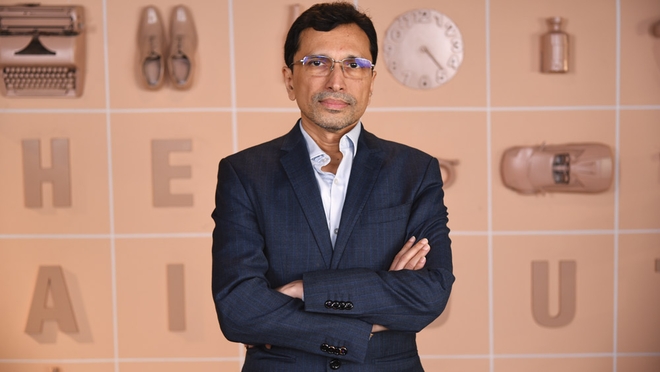
Mahesh Patil began his career as an engineer, but quickly realised his true potential lay in finance. This led him to stints at Motilal Oswal and Parag Parikh, followed by Aditya Birla Sun Life AMC, where he has been for the past 20 years. Currently Patil is the CIO at the fund house. He believes his extensive tenure has helped shape his personal investing philosophy and the investment approach at the AMC, which focuses on "avoiding excessive risks" and prioritising "high-growth companies". In this interview, Patil discusses his stock-picking strategy, whether active large-cap funds can still beat their benchmarks and the key factors that helped his funds rebound. You started off as a computer engineer before moving into finance. What sparked your interest in investing? As a student, I aspired to become an engineer. In those days, career choices were often limited to engineering or medicine. During the late 1980s, my father, a government employee, had investments in blue chip and multinational companies. He frequently spoke about how they gave good dividends, which piqued my curiosity. But in 1992, when India announced its economic reforms and witnessed the bull run, my interest in the stock market truly took shape. The rapid wealth creation at the time was fascinating and opened my eyes to the potential of investing. Around the same time, equity research was emerging as a field, and I realised my engineering background, particularly my analytical skills, aligned well with it, steering me towards a career in equity research. What shaped your approach as a research analyst at Parag Parikh Financial Advisory Services and Motilal Oswal? Working with leading equity research firms in my early career days gave me a strong foundation in analysing companies, building financial models and understanding various sectors. At the time, we tracked fewer companies, which allowed for in-depth research and a meticulous approach to financial analysis. Since we had to build models from scratch, scrutinising balance sheets and annual reports became second nature. These not only reflected a company's growth but also revealed subtle accounting moves some firms employed. This rigorous examination of financial statements hon
This story is not available as it is from the Mutual Fund Insight March 2025 issue
Read other available articlesAdvertisement

 New episodes every Friday











 New Process Alert
 Seems like you've uploaded a wrong QR code. Please upload the QR code downloaded from MF Central platform.


