 Widely read:


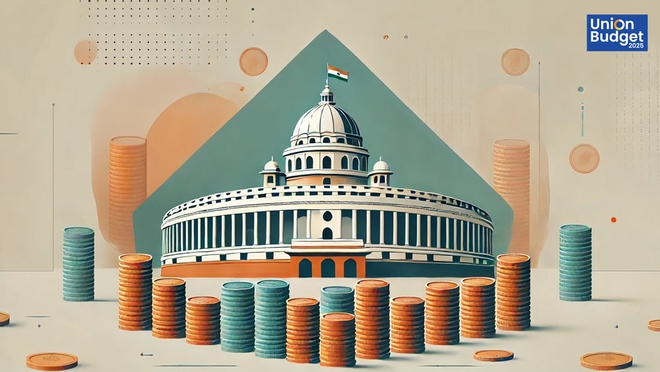

Think of revenue receipts as the government's salary — it's the money earned to fund everything from roads to railways, schools to security, without dipping into debt. Just like a balanced household relies on regular income to stay afloat, a nation's fiscal health depends on its revenue receipts. Let's decode this unsung hero of the Union Budget and see how it fuels India's growth story.
What are revenue receipts?
Imagine a family that earns Rs 50,000 a month. This is their regular income — no loans, no IOUs. That's what revenue receipts are for the government: money earned without creating liabilities. They're divided into two main streams:
- Tax revenue: This includes collections from income tax, corporate tax, GST, customs, and excise duties. For FY 2024-25, tax revenue is projected at a whopping Rs 31.3 lakh crore, with Rs 25.8 lakh crore going directly to the Centre.
- Non-tax revenue: Think of this as bonus income — dividends, profits, fees, fines, and even surplus transfers from the RBI. For FY 2024-25, it's expected to hit Rs 5.5 lakh crore, a sharp 36 per cent jump from the previous year.

Why do revenue receipts matter?
Because they're the lifeblood of government operations. Without them, we'd be borrowing just to keep the lights on. Healthy revenue receipts mean:
- Infrastructure gets built: Highways, bridges, and public amenities keep the economy moving.
- Social welfare thrives: Funds for healthcare, education, and housing schemes depend on these receipts.
- Security stays strong: Defence and law enforcement budgets rely heavily on revenue inflows.
When revenue receipts fall short, the government must borrow, leading to higher fiscal burdens and spiralling interest costs — a slippery slope no one wants to slide down.
Crunching the numbers
The Union Budget 2024-25 tells an optimistic story:
- Tax revenue growth: The Centre's net tax revenue is expected to grow by 11 per cent, from Rs 23.2 lakh crore in FY 2023-24 to Rs 25.8 lakh crore in FY 2024-25.
- Non-tax revenue surge: With dividends from public sector enterprises and RBI surplus transfers leading the way, non-tax revenue is set to jump 36 per cent.
These numbers align with the government's aim of reducing the revenue deficit to 1.8 per cent of GDP — down from 2.6 per cent the previous year.

A quick history lesson
Here's a fun fact: India's revenue receipts got a major upgrade post-1991, thanks to economic reforms. The introduction of Value Added Tax (VAT) and later GST modernised the tax system, making it more efficient and boosting collections. It was like upgrading from a piggy bank to a smart savings app.
Closing thoughts
Revenue receipts may not grab headlines, but they're the unsung heroes of the Budget. They fund everything that makes a nation tick while ensuring fiscal discipline. A growing tax base, smarter compliance, and efficient collection can transform these receipts into powerful drivers of economic growth.
So, the next time someone talks about Budget jargon, you'll know that revenue receipts are more than just a line item — they're the salary that keeps India's economy running. And unlike your boss, the government can't miss payday!
Keep playing "Budget Lingo"
Revisit the previous term: The tax-to-GDP ratio: How well is India collecting its dues?
Learn the next term: Revenue expenditure: The monthly bills that keep India running
Stay with us as we continue to decode the terms that demystify India's Union Budget.
Disclaimer: This content is for information only and should not be considered investment advice or a recommendation.
For grievances: [email protected]
Ask Value Research 
 New episodes every Friday









 New Process Alert
 Seems like you've uploaded a wrong QR code. Please upload the QR code downloaded from MF Central platform.


