 Widely read:


Dhirendra Kumar's Editor's Note on AI (artificial intelligence), published on September 21, received significant feedback from readers. The thoughtful responses underscored the importance and relevance of the topic. As a gesture of appreciation, we dedicate this section to our valued readers, whose insights help enrich these discussions.
Summary
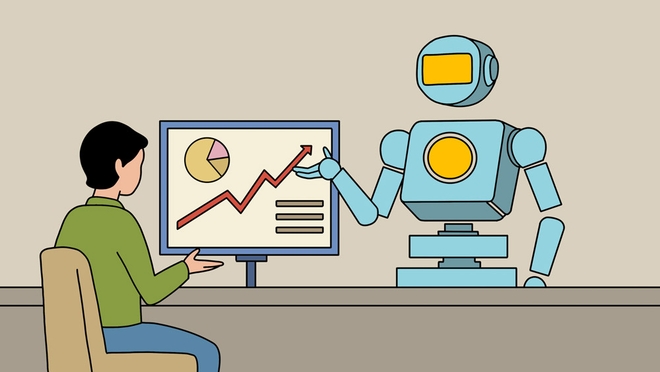
Robo-advisors are an inevitability. Specifically, I'm talking about personal finance and mutual fund advice, which will increasingly be delivered by robo-advisors.
When I say robo-advisors, I mean automated, software-driven systems that replace human advisors. However, I do not mean 'AI' as it's commonly understood today, driven by LLMs (large language models). Instead, robo-advisors operate based on predefined rules and algorithms. Many mutual fund investors, especially beginners, need advice when they start investing. But their initial investment amounts are often too small to justify the cost of hiring a competent human advisor. This creates a barrier to entry for middle-class investors or young professionals just starting their careers. Without affordable and quality advice, these investors either make poor investment choices or avoid investing altogether.
This is where robo-advisors step in, providing standardised yet personalised advice based on algorithms. These systems can serve thousands of clients at once, making them highly cost-effective for both investors and financial institutions. As the Indian market matures, we can expect to see the rise of these automated advisory services, democratising access to financial guidance and helping investors make better decisions.
Now, coming back to the so-called 'AI'. Whether advice comes from a human or a machine, it has to be transparent, understandable and deterministic. For example, if the advice is to invest 30 per cent of your money in gold, the logic behind it must be clearly stated. This is where LLMs fall short.
Instead, robo-advisors should emulate human experts by drawing conclusions from explicitly stated rules, similar to what was once known as an 'expert system.' These systems, developed in the 1970s and 80s, mimic human decision-making in specific fields, and today's best robo-advisors follow a similar approach.
The future of financial advice in India lies with these transparent, rule-based robo-advisors, not opaque AI systems. While advanced AI technologies have their place, the critical nature of financial decisions requires a more accountable and predictable approach.
What our readers say
That's really useful information. This reminded me of when I wanted to start an SIP, but information on how and where to start was required. Then, my younger brother gave me a list of good mutual funds, which I registered immediately for.
It has been 15 years now, and I realised that this wonder can be believed only after experiencing it. We are fortunate that we are part of the Indian growth story and can witness it. I am an old reader of your columns, and your guidance has helped me for many years.
Thank you for sharing your knowledge and guiding us - Pankaj Shah
Truly, it is an insight into the future, as it should be.
Enterprises will prioritise platforms that facilitate the integration of commonly available data and private data, positioning the hybrid cloud as a cornerstone for AI success in the coming year: Erica Langhi, Red Hat - P N Sarawgi
I have been tracking LLM for some time and thought of what you are predicting as 'Why has this not been implemented?' It's nice to know that some others are also following the same thing. Keep up the good work - Abhijit
The information provided was incredibly insightful and enlightening. I sincerely appreciate it. Thank you - Rajdip Singh
I am pasting one of the paragraphs from your note, "Instead, an automated advisory system should emulate a human expert by drawing its inferences and conclusions from a set of rules that are explicitly stated and based on what human experts would do. Those who know the history of AI must be smiling right now because what I have just stated - intentionally - is a description of an 'Expert System', which is what AI was supposed to be earlier."
I want to give a live example. A few months ago, the managing editor of XXXX had a morning show starting at 8 am, and thereafter, on several occasions, he highly and widely recommended in favour of Vodafone Idea. He even gave a target price to hold for the long term.
Probably, the curative/review petition pending before the Hon'ble Supreme Court in the case of AGR might have escaped his mind. The Court did not entertain the Vodafone plea, and as a result, the company incurred huge financial liabilities. Vodafone shares fell drastically the day the court verdict was pronounced. The viewers who had purchased the shares of Vodafone based on such recommendations of the managing editor of XXXX lost heavily and trolled him, who, in turn, very articulately in his merry-go-round replied on his morning show dated either September 19 or September 20. You may be able to get the video online. This speaks a lot about AI or human behaviour. Ultimately, self-help is the best help for fresh/old investors. AI or human expertise serves as spoon-feeding in every field - Kishore Arvindlal Pandya
Another useful article. As I read more of your articles, I think that besides financial literacy, one's thoughts and mental makeup matter a lot - Sandip
Your perspective on AI and robo advisors is an interesting mix of advice, but decisions should be left to investors, who should understand and press the approval button if available. Just like the sex of the baby cannot be predicted by AI or a robo advisor, nor can normal or caesarean deliveries be made by robots, the final decision should be left to the doctor. In the case of investments, the retail individual investor, who should take credit for the right decision, should learn from mistakes - Nandkumar
This article was originally published on October 21, 2024.
Ask Value Research 

 New episodes every Friday









 New Process Alert
 Seems like you've uploaded a wrong QR code. Please upload the QR code downloaded from MF Central platform.


