 Widely read:


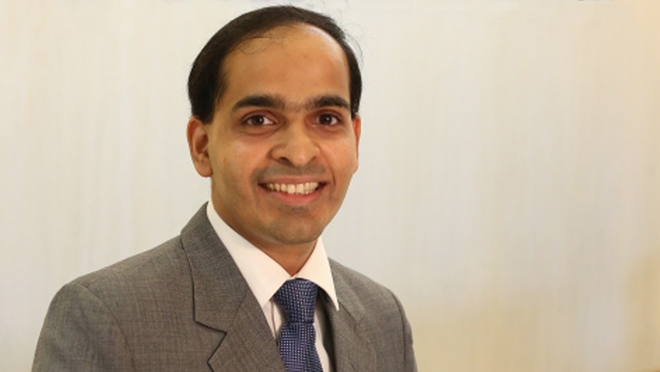

Dinesh Balachandran has been at the helm of SBI Funds Management for the last 12 years. A seasoned fixed-income analyst, he shifted his focus towards Indian equity markets after a decade-long stint at Fidelity Investments USA. Presently, Balachandran is the Head of Equity at SBI Mutual Fund, where he oversees four schemes - SBI Balanced Advantage Fund, SBI Contra Fund, SBI Long Term Equity Fund and SBI Multi Asset Allocation Fund - that has a total asset value of around Rs 81,800 crore. In this interview, the IIT alumnus provides a glimpse into his career transition from fixed-income management to focusing on Indian equity markets, the factors that make a stock a compelling buy and how first-time investors can navigate the current market. Here is an edited transcript of the interview. You studied engineering at IIT Bombay and then earned a master's degree from MIT. What sparked your interest in finance then? When I joined IIT Bombay, working in finance was not on my radar. I was more focused on engineering. With that mindset, I moved to MIT (Massachusetts Institute of Technology) for a PhD. The best part about that institution is that one can attend the classes of any department. Out of curiosity, I took a few investing-related courses at MIT Sloan to understand what this field is all about. While it was just a few classes, something there clicked for me. The fundamental problem with a PhD-like experience is that you can go for years trying to do something and not know whether you're going in the right direction. So, the feedback loop in terms of timing is very long. However, in investing, it feels like the market always gives you a report card. It tells you whether your investments are doing well or not. The intellectual challenge associated with the financial markets appealed to me. So, I then decided to give it a shot. Initially, I thought that if it didn't work out, maybe I'd just return to my roots. But thankfully, it has worked out so far. I'm curious about your career transition from working for a decade in fixed-income management at Fidelity in Boston to focusing on Indian equity markets. What motivated this shift? During my stint at Fidelity, I covered everything from money markets, municipal bonds, taxable bonds, structured finance and collateralised debt obligations (CDOs). It felt like I practically covered almost all the major aspects of the fixed-income market while working in the US. Later, I moved back to India for personal reasons and wanted to work in a challenging role.

 New episodes every Friday








 New Process Alert
 Seems like you've uploaded a wrong QR code. Please upload the QR code downloaded from MF Central platform.


