 Widely read:


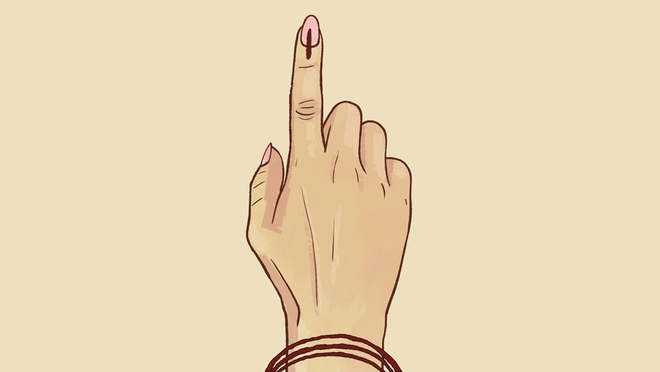
"The right to equality in voting is a basic human right in liberal democracy. Women enjoy this right to equality in voting, and by casting a vote, they make a formal expression of their individual choice of political parties, representatives or of broad policies. The fact that more women are voluntarily exercising their constitutional right of adult suffrage across all states in India is testimony to the rise of self-empowerment of women to secure their fundamental right to freedom of expression. This is an extraordinary achievement in the world's largest democracy with 717 million voters of which 342 million voters are women." - Dr. Shamika Ravi in her essay titled Women and Electoral Politics: The Good, Bad and Ugly (2017). Female representation in Parliament continues to remain abysmal Kondagaon district in Chhattisgarh is home to some of the most disadvantaged people in India. Here resides Ms Lata Usendi, a seasoned politician who served as Minister of Women and Child Development in Chhattisgarh. She has actively participated in politics since 1998. Whilst she lost the 2018 state assembly elections, she continued working towards the betterment of people in Kondagaon. Five years later, she contested the state assembly election again and won. The grit and determination demonstrated by Ms Usendi, her passion towards her profession, and her aspiration despite challenging circumstances, especially in the region she comes from, are increasingly becoming the norm. Despite India implementing a universal adult franchise in 1947, women's political representation in the Indian Parliament has remained poor. The number of women getting elected to Lok Sabha grew at a meagre 2 per cent CAGR over the last 20 years. Thus, even though the percentage of women elected from those who contested decreased materially (meaning more women are contesting than before), the share of women across elected representatives in Lok Sabha has risen from 9 to just 14 per cent during the same period. This indicates that more women contesting elections does not translate into more women getting elected. More
This article was originally published on May 01, 2024.
This story is not available as it is from the Wealth Insight May 2024 issue
Read other available articlesAdvertisement

 New episodes every Friday













 New Process Alert
 Seems like you've uploaded a wrong QR code. Please upload the QR code downloaded from MF Central platform.


